The Appalachian Floods, 2022
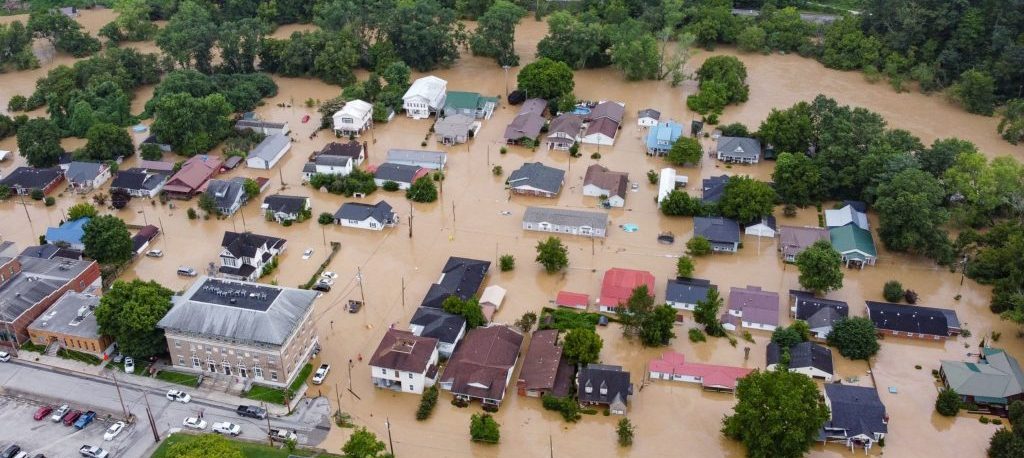
The Appalachian river valley experienced abnormally high levels of prolonged rainfall over a short time, resulting in flash flooding across the region. Homes and bridges were damaged by the floodwaters, and many roads were blocked by debris. In more rural areas, many communities rely on a small number of crossings, meaning that bridge failures completely isolated towns, delaying relief efforts further.
In many cases, bridge failure was caused by debris accumulation and scour around the foundations rather than the bridge deck collapsing. This highlights a weakness of more permanent bridge structures, which are not necessarily designed for such high river velocities. Additionally, replacing a bridge permanently can take a very long time, especially when access is needed as soon as possible after a disaster.
Deployable bridge structures could have been useful here. Temporary structures can be assembled much quicker, and can provide immediate access to cut off communities, allowing for a more effective disaster relief effort. The unique geography of the Appalachian valley meant that it was very heard to reach the places that had been most affected. More traditional bridge designs would have been cumbersome and hard to transport to isolated areas, needing roads to achieve this. However, a compact foldable structure like the one I am proposing can be quickly airlifted in, speeding up disaster response. Indeed, after the disaster’s effects have subsided, these structures can remain in place as a temporary fix while more permanent infrastructure is constructed.
Overall, the Appalachian floods show how civil engineering must balance long-term resilience with quick, adaptable solutions to react promptly when disasters occur.
Flooding In Bangladesh, 2020
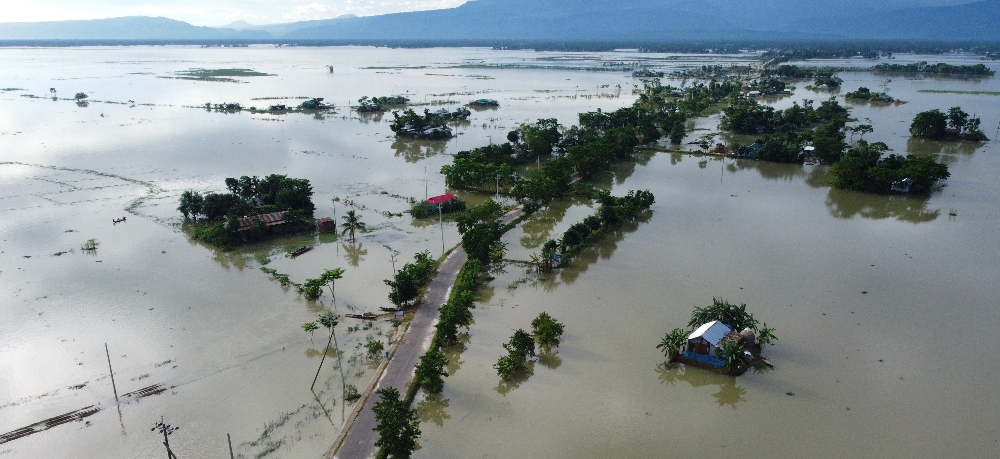
Bangladesh is highly vulnerable to flooding due to its low-lying geography and large river systems, such as the Ganges and Brahmaputra. During the annual monsoon season, about 30% of the country was submerged, affecting over 5 million people. Widespread flooding caused irreparable damage to roads and bridges, particularly in rural areas where crossings are often simple structures close to the river surface. Bangladesh is among the 10 most disaster-affected countries in the world, but the facility of the country to react effectively to disasters is reduced.
In Bangladesh, a single small bridge may be the only connection between a village and its neighbouring towns. When these connections were lost, people were left without access to medical care, food supplies, and emergency aid. The reconstruction of permanent bridges was very slow due to underfunding and lack of organisation.
A developing country, Bangladesh was unable to produce a quick and effective response to these challenges. 1.1 million people were displaced, but only 100,000 were accessibly brought to safety. They would have had the capability to utilise cheap, temporary structures to provide quick access to cut off regions, if these were available.
Overall, the Bangladesh flooding event prompted the creation of an anticipatory action framework and a Humanitarian Response Plan, providing aid to communities still suffering from the after-effects of flooding events